11
Followers
23
Following

Reading Slothfully
I was told in elementary school that I only could read at half the speed for success in college. Oh well, one benefit of slow reading is you get to live with the characters a longer period of time. I read in a vain attempt to better understand people. At my other homes, I'm known as a spouse, pop, guy in the choir, physical chemist, computer/web dilettante and child-care provider. In theory, I'm a published author, if you consider stuff like Quenching Cross Sections for Electronic Energy Transfer Reactions Between Metastable Argon Atoms and Noble Gases and Small Molecules to count as publications. I've strewn dozens of such fascinating things to the winds.
Currently reading

Twenty Thousand Leagues Under the Seas

The Spirit of the Border

Ramona the Brave (Ramona, #3)

The Underground Man (Vintage Crime/Black Lizard)

Delilah of the Snows

Mrs. Miniver
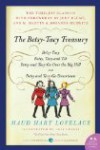
Betsy-Tacy Treasury (P.S.)

A Christmas Carol
The Way Some People Die

Envy of Angels


Good-Bye, Mr. Chips
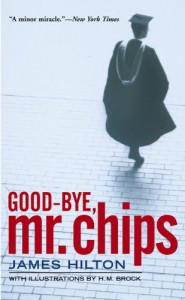 Good-Bye, Mr. Chips is considered a classic of sorts, but not in the orbit of Dickens or Jane Austen. I don't believe I ever read it back in the old days. Basically it's about a guy, Mr. Chipping—fondly referred to as "Chips" to his students—who becomes a school master (teacher) at a second-rank "public" school, Brookfield, in Britain beginning around 1870. So-called "public" schools were in fact, private schools where the better off went to be educated along with their upper crust peers. The lower classes went to "council" schools, if they got any schooling at all. Anyway, Mr. Chips association with Brookfield covered a period of some sixty years. In essence, his life and that of Brookings were rather closely intertwined.
 Mostly, we have musings by Mr. Chips, himself, remembering his long association with Brookfield. It's a rather charming book. I wonder if people who don't have some association or knowledge of the British "public" school system of yore would understand much in this book. But, I had a lot of fun reading this book. It was a nice break from literature alleged to be more crucial for one's development into a well-read gentleperson, some of which isn't so hot, like Robinson Crusoe. Also a nice respite from the more manly things I'm ridiculed into reading, stuff from the likes of Robert E. Howard (not so hot) or Edgar Wallace (ok).
Good-Bye, Mr. Chips provided a nice calming finish to the "old" year.
